By: Justin Walker | WV Sports Chat
The numbers are in, and for WVU football fans, there is plenty of reason for optimism. While the transfer portal can often feel like a roll of the dice, a side-by-side statistical comparison between the 2026 and 2025 transfer classes reveals a clear trend: West Virginia isn’t just getting more experienced players—they are getting better players.
Here is a breakdown of why the 2026 roster overhaul represents a massive upgrade for the Mountaineers.
Quality Over Quantity
In 2025, the program was in “survival mode,” bringing in a staggering 52 transfers simply to fill out a depleted roster. This year, the approach was more surgical. With only 30 incoming transfers (sans special teams), the staff focused on proven production rather than just raw potential.
• FBS Readiness: 73% of the 2026 class arrives with at least 100 snaps of FBS experience, a significant jump from the 56% we saw in the previous class.
• Starting Experience: The new class averages 10.6 FBS starts per player, compared to just 7.6 starts in 2025. This means fewer “projects” and more “plug-and-play” starters.
• The P4 Factor: Last year, of the players who suited up for the Mountaineers, only about 35% of the transfers had Power 4 experience. This year, 56% of the class comes with P4 pedigree.
The “Size-Up” on Defense
One of the most frequent points of emphasis from the coaching staff has been the need for more length and weight on the defensive side of the ball. The 2026 class delivers on that front across every level:
• The Edge: At the Bandit and Defensive End positions, the team has gained an average of 1.6 inches in height and nearly 10 pounds per man. More importantly, WVU now boasts six players at 6-foot-4 inches or taller on the edge. This provides the length needed to bat down passes and set the edge more effectively.
• The Secondary: The defensive backfield is also getting rangier. The average height in the secondary has increased by nearly an inch, with five defensive backs now standing 6-foot-2 or taller.
• Linebackers: The unit added an average of two pounds per man and nearly an inch in height, featuring four players who are 6-foot-3 or above.
Building a “Trickett” Wall
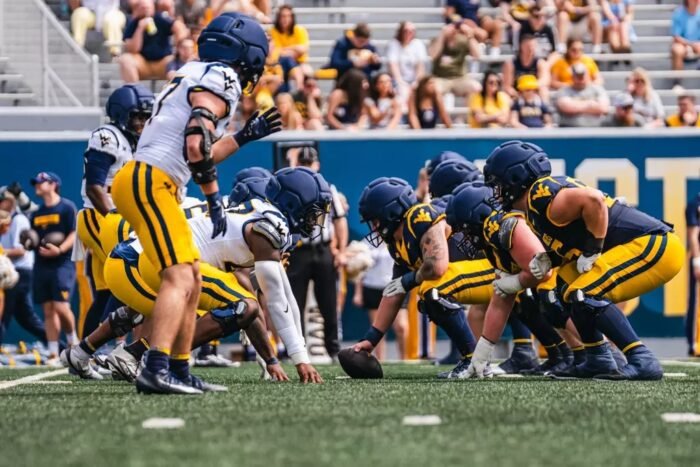
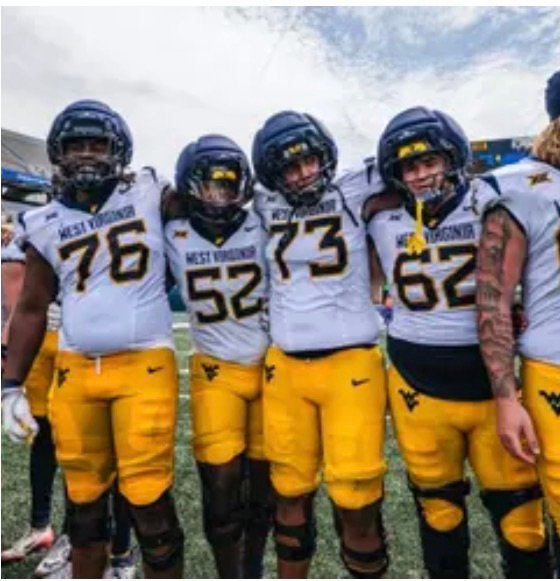
The return of offensive line Coach Rick Trickett to WVU football is a major storyline. The veteran coach is also working with a more seasoned group of transfers than the Mountaineers had a year ago. The incoming 2026 offensive linemen average 1,242 FBS snaps prior to arriving in Morgantown—nearly double the experience level of the 2025 transfer group. This unit is taller and more consistent in size. They are moving away from outliers and toward a cohesive, high-floor front. It’s also notable that two of those offensive line transfers, Cam Griffin and Amare Grayson, played under both Trickett and Rodriguez at Jacksonville State prior to relocating to Morgantown.
Performance Upgrades
This year’s transfer class has also performed better collectively over the course of their careers. Per Pro Football Focus (PFF), the average overall grade of the incoming transfer class was 66.25. Last year’s incoming transfers had an average PFF grade of 64.99 before arriving at WVU. This may not seem like much of an improvement. However, when considering the higher number of snaps played, and the fact they did it against a higher level of competition, it’s significant.
The Continuity Advantage
Perhaps the most underrated factor for the 2026 season isn’t a transfer stat at all—it’s time.
In 2025, nearly half of the transfers didn’t arrive until after spring ball, missing out on crucial conditioning and playbook installation. This year, the staff (now in Year 2) has a general manager and a full recruitment department in place. This has led to better scouting and, more importantly, getting players into the program earlier.
The Bottom Line
Numbers alone don’t win football games—coaching, execution, and talent do. However, the “tangibles” for West Virginia have improved at almost every position. With 52% returning production (up from 46% last year) and a transfer class that is objectively more experienced and physically imposing, an 8-plus win season is a very realistic conversation for WVU football in 2026.
For more details, check out the video version of this story on a recent episode of Couz’s Corner.
Photo Credit: WVU Athletics