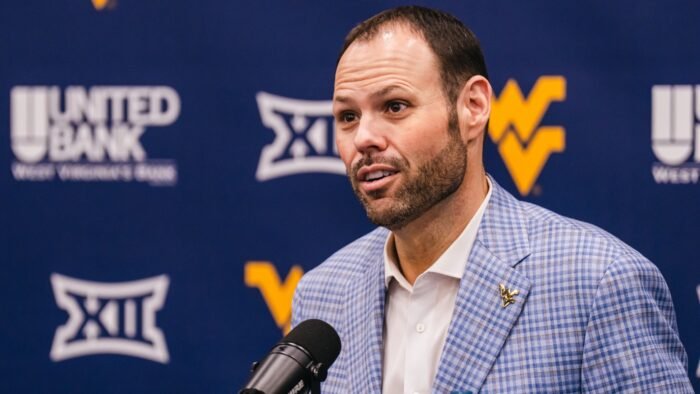
By: Landon Scott | WV Sports Chat
A quick examination of the college football landscape in January of 2026 reveals a far different image for the sport than just a decade prior. Vanquished are the dominant programs such as Georgia, Ohio State, and Alabama, knocked from the playoff by far less recently successful programs. Following the College Football Playoff’s national semi-final games, Miami has reclaimed their status as a national contender after securing a breathtaking victory over Ole Miss in the last moments of the contest. Joining them in the championship game is former habitual loser Indiana, fresh off a shellacking over an incredibly talented Oregon team, their second triumph over the Ducks this season.
The clash of Miami and Indiana represent two vastly different methods of roster construction. Miami, soaring on a robust NIL collective and alluring history of football excellence, consistently find themselves in the upper echelons of college football recruiting. With five national championships to their name, Miami originally conquered the sport by dominating recruiting in South Florida, the most fertile recruiting grounds in the country. In the years since their most recent title in 2001, Miami has been searching for a coach to solidify their on-field performance to match the talent they so often attract. Indiana, however, must scour the country for under appreciated gems that will fit perfectly in their system. The Hoosiers have utilized players with considerable experience, albeit little professional upside to build a contender. In short, Miami crafts a system to maximize the potential of their talented roster, while Indiana identifies ideal players to act as cogs in an already efficient and disciplined football machine. Despite the talent discrepancy, the Hoosiers have been the unquestioned best team in America since the season kicked off in August, it just took them a while to prove it.
Even with their 14-0 record and their first Big Ten Conference championship in well over half a century, the Hoosiers cannot escape their identity as a plucky underdog story. It has little to do with their history as an underachieving program but instead lies with their roster of unheralded heroes; a collection of non-bluechip talent supercharged into a tyrannical superpower in the football world. It is important to note that despite how easy Coach Cignetti has made this two-year transformation look, it has been exceptionally difficult, but more so improbable.
History has shown that in college athletics, sustained success at the national level is only achieved with consistent recruiting of elite talent. A detailed examination of the recruiting data on 247 Sports reveals many interesting things, such as Indiana having a current recruiting class ranking of thirty-fourth. While this may seem unexpectedly high for a team playing for a National Championship, it is a far cry from Coach Cignetti’s previous two classes, which were rated firmly in the sixties. The sudden, significant jump is a testament to a simple truth in college athletics. A coach, no matter how great of a talent developer, will always recruit higher ranked players, as they are more likely to transform into quality contributors. It is important to note the Hoosiers’ recent on-field success is not the sole factor for their recent uptick in recruiting. On January 7th, national media outlets reported that alumni billionaire Mark Cuban would make a significant contribution to Indiana’s NIL collective, allowing them to pursue the highly rated recruits they need to build on their momentum. NIL deals, as well as revenue-sharing between the programs and the players, has allowed the next tiers of schools to snag some high-level recruits of their own and stake a claim the national conversation. Enter West Virginia.
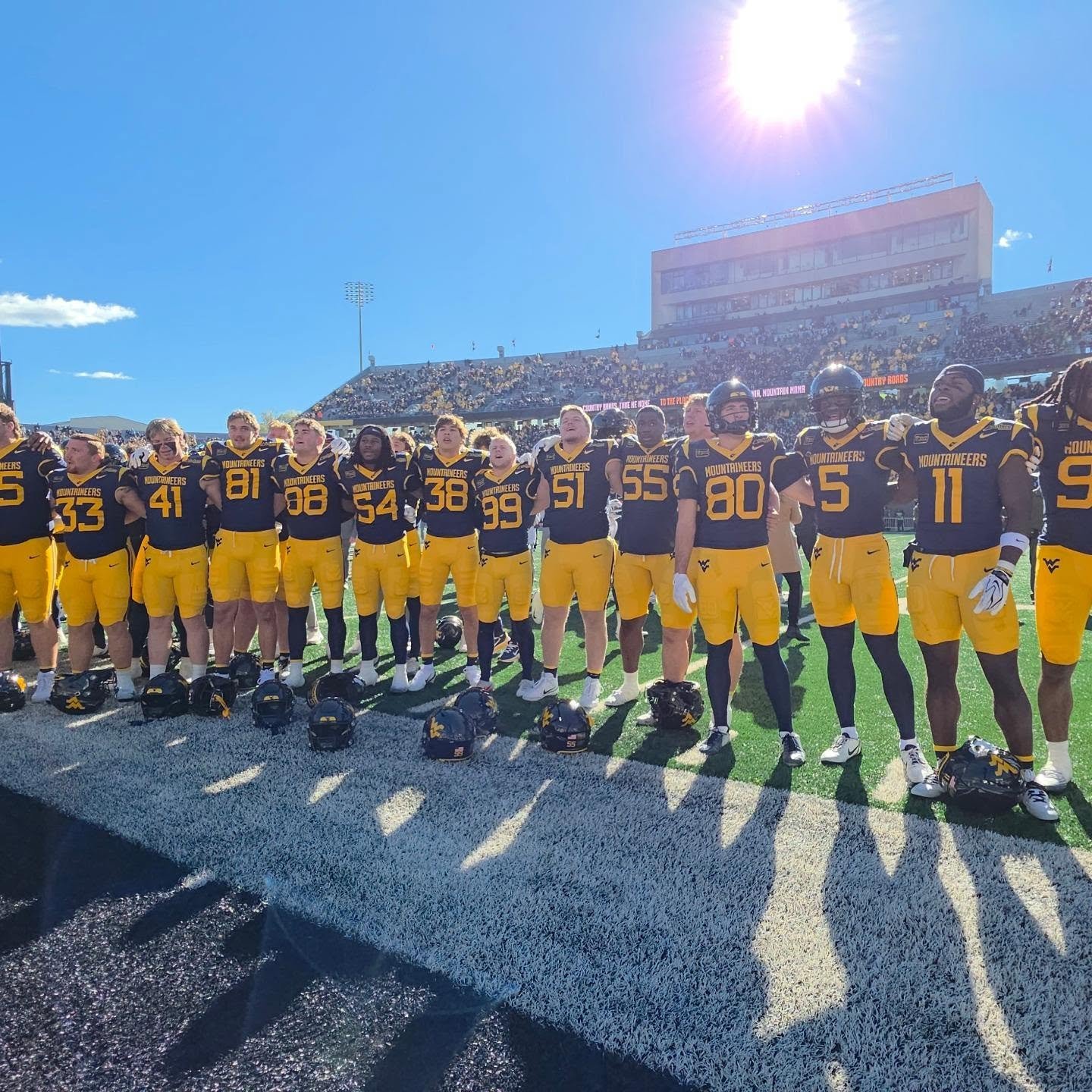
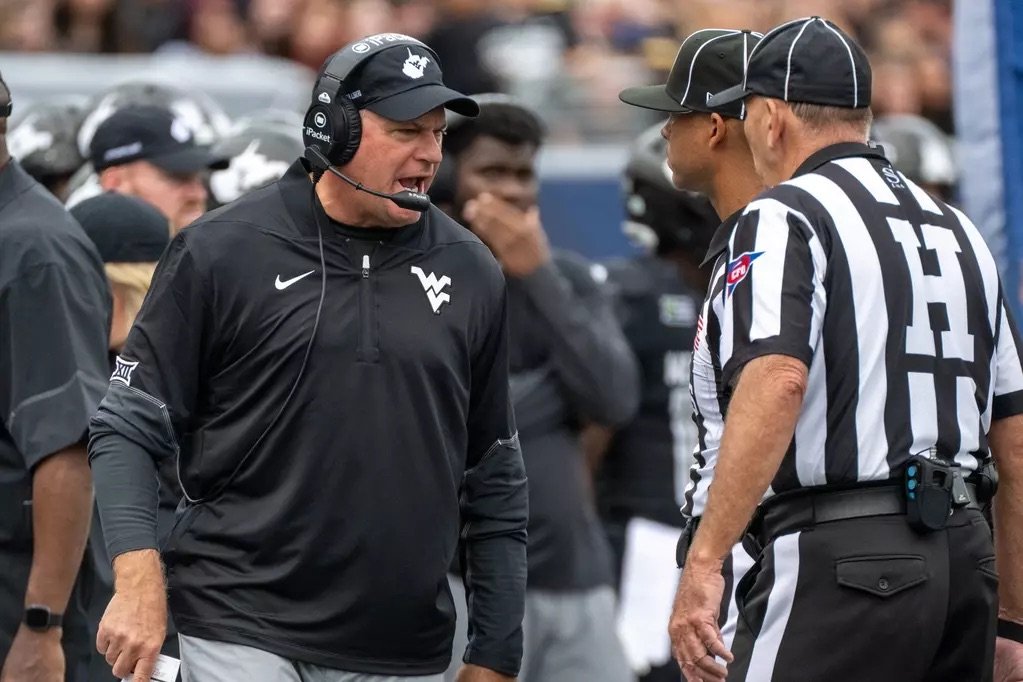
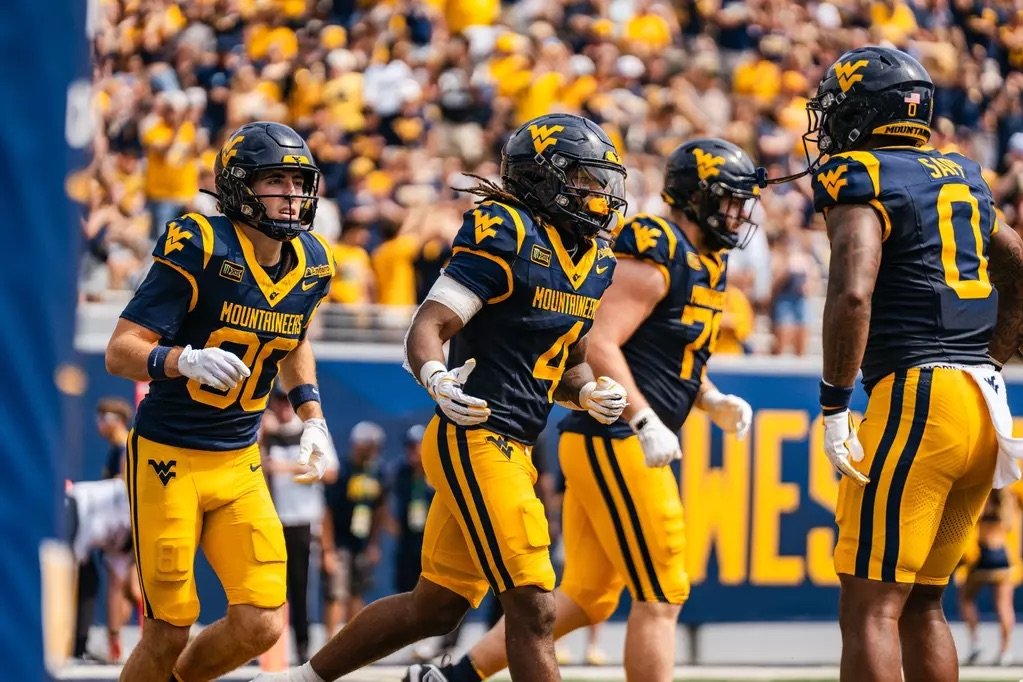
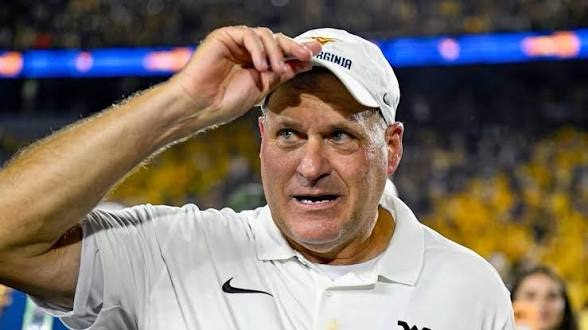
Fresh off a 4-8 season, head WVU football coach Rich Rodriguez and the Mountaineers have secured the twenty-sixth rated recruiting class. The class is headlined by a quartet of highly rated four-star recruits, setting a new high-water mark for the program in a single class. Two of these recruits, Kevin Brown and Matt Sieg, find themselves within the top sixteen rated commits in the program’s rich history. Brown, an offensive tackle, and Matt Sieg, a safety capable of playing wide receiver, chose the Mountaineers over perennial winner Penn State. Running back Amari Latimer declined offers from the likes of Wisconsin, Tennessee, and Ohio State to commit to WVU. Lastly is cornerback Vincent Smith, an Illinois native who spurned other Midwest offers from Iowa and Iowa State, opting to sign with the Mountaineers. In fact, for perhaps the first time ever, it may take more than one hand to count West Virginia’s recruiting triumphs over power programs in a single season.
On the men’s basketball side, another coaching change and difficult start to the season did not sway Miles Sadler from committing to the program. Sadler, the fourth rated point guard in the country, will join WVU basketball as the highest-rated recruit in the history of the program. Accompanying him to Morgantown next season are Kingston Whitty and Aliou Dioum, two other players rated within the top two hundred recruits, giving the school the eighteenth ranked class in hoops. West Virginia has experienced the occasional victory in recruiting, but they have not experienced prolonged success on this front.
This is because West Virginia built their football and basketball programs on coaching intended to identify undervalued talent, and build it into conference-contending, hard nosed juggernauts. While power programs have gobbled up blue chip prospects, the Mountaineers have scoured the remains for potential program changers. From Bobby Bowden and Don Nehlen to John Beilein and Bob Huggins, Mountaineer coaches have embodied hard work and an underdog mentality. This remains true with the recent rehire of Rich Rodriguez, a coach hoping to reimplement his “hard edge” style of player development and cutthroat competitive spirit. Rodriguez was the architect of the Mountaineers most successful stint in football, supercharging his own legion of unheralded recruits into a national championship contender. Without him, names such as Pat White and Steve Slaton may have been unknown by the college football world. An elite eye for talent, Rodriguez has long identified players with unique skills to plug into his rapidly paced, run-first system of offense that erases talent deficits.
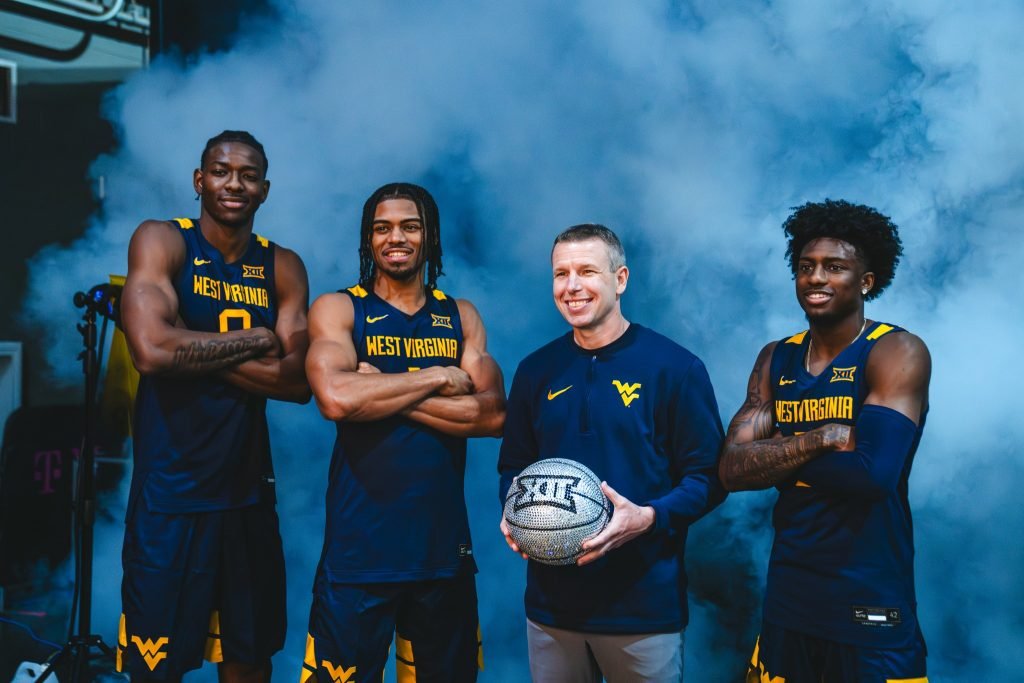
New basketball coach Ross Hodge joins West Virginia from North Texas, fresh off a 27-9 campaign. He brings an elite defensive scheme to Morgantown, one that historically goes dozens of game consecutively without surrendering more than seventy points. He demands an unwavering commitment to effort on defense, one so intense he begins substitutions only two minutes into the contest to ensure fresh legs are always available on the hardwood. Detractors may point to a lack of division one head coaching experience, as Hodge was hired after only two seasons leading the Mean Green. However, North Texas achieved conference contending success in only Hodge’s second season, which was also the program’s second in the bigger, more competitive American Athletic Conference, after over a decade in Conference USA. Optimists may point to his tenures at Paris Junior College and Midland College, where he compiled a combined record of 146-24 and junior college title game appearance as a young coach. Regardless, one thing is undeniable about the Mountaineers’ new coach. At every stop along the way, Coach Hodge has extracted the best from his players, especially on the defensive end of the floor. This characteristic puts him in company with the likes of other West Virginia coaching greats, regardless of sport.
Looking at the past twenty-five years of recruiting data, the Mountaineers have secured an average recruiting class composite rating of 40th in football and 54th in basketball, respectively, supporting the claim that WVU regularly has to “coach up” their players. This does not mean that an occasional high-end recruiting class has not found its way to Morgantown, as when team success occurs, the Mountaineers occasionally cash in on the momentum. In 2006, following a Sugar Bowl victory over Georgia, West Virginia signed the twenty forth ranked class, a feat replicated in 2009, only one season removed from a Fiesta Bowl victory. The latter class included the likes of Geno Smith, Stedman Bailey, and Tavon Austin, players who propelled the program through a coaching change from Bill Stewart to Dana Holgorsen and eventually decimated Clemson in the 2012 Orange Bowl. However, despite the national success, the other recruiting classes during this time came up short, including a forty ninth ranked class in 2008 and fifty second ranked class in 2011.
Even in hoops, certain classes left a mark on the program, such as 2006’s thirty fifth ranked class, which included De’Sean Butler, and 2008’s twenty third ranked class that included Darryl Bryant, Kevin Jones, and Devin Ebanks, all of whom became key pieces to a Final Four appearance in 2010. Like in football, the notable basketball commitments came following strong seasons. On court success culminated in an NIT Championship in 2006 and a March Madness victory over Duke in 2008. So, how have the Mountaineers managed to improve so greatly at recruiting leading into 2026, despite a middling record over the past near-decade in both sports?
To find out, it is important to recall when Athletic Director Wren Baker proclaimed that WVU planned to be in the top tier of Big 12 teams in terms of revenue share. At the time, it seemed like nothing more than a hopeful claim, perhaps intended to appease an uneasy fan base. In the months since, West Virginia University got to work to on implementing measures to ensure sufficient revenue would be available to split with the athletes. In 2025, the school announced a ten-year agreement with Hope Gas for the naming rights of the Coliseum, resulting in large logos plastered on the grand entrance of the arena and baseline of the playing floor. Additional deals have been made with BioPrecision and Planet Fitness, along with other local companies, to supplement more advertising during events at West Virginia University venues. Long term investments are being made as well, such as the board-approved plans to install premium seating in Milan-Puskar Stadium. These foundations were laid to maximize revenue for the athletic department, where up to twenty and a half million dollars can be shared with athletes, per the house settlement. Combined with West Virginia’s competitive NIL collective, featuring contributions from important figures such as Pat McAfee and Arizona Diamondbacks owner Ken Kendrick, the goal was to attract high-level talent to Morgantown.
As basketball season progresses, coach Ross Hodge will put the finishing touches on his first recruiting class, hoping to add to his three aforementioned commitments. Simultaneously, Rich Rodriguez will continue to fill out the football roster using the transfer portal. The transfer class already features three former four-stars in TaRon Francis, a receiver from LSU, Kamari Wilson, a safety from Memphis, and Cam Cook, a running back from Jacksonville State. Their commitments, along with that of Matt Sieg, Kevin Brown, and Miles Sadler, are proof that West Virginia has assembled the funding capable of securing high-end talent in both major sports. More impressively, it occurs at a time when recruits are not swayed by strong on-field or on-court performance. The recruits were swayed by the vision of the coaches, ultramodern facilities, ravenous fan base, and the competitive offers fielded by the school.
Wren Baker and the WVU coaches have quietly admitted the earlier truth noted about college sports: it is hard to win consistently without an influx of talent. The Mountaineers will no longer rely exclusively on transforming coal into diamonds. In the new Big 12 Conference, a league full of proud programs and rich donor bases, the Mountaineers demonstrated their intent to escape the middle of pack with these signings. Should they succeed, future recruiting will determine if the football and basketball programs are able to remain at the top. In the meantime, Coach Rodriguez and Coach Hodge will feel increased pressure from fans to succeed with the premier players at their disposal next season, as the luxury of high-end talent is a two-edge sword. They bring a higher likelihood of program changing ability but eliminate the opportunity for excuses if things go poorly. Fortunately for fans, the ever-meticulous Wren Baker selected his generals carefully with the knowledge they would face this exact conundrum. Much like Indiana, West Virginia plans on answering an old question in college athletics: What happens if you gave that coach even more talented players?