By: Justin Walker | WV Sports Chat
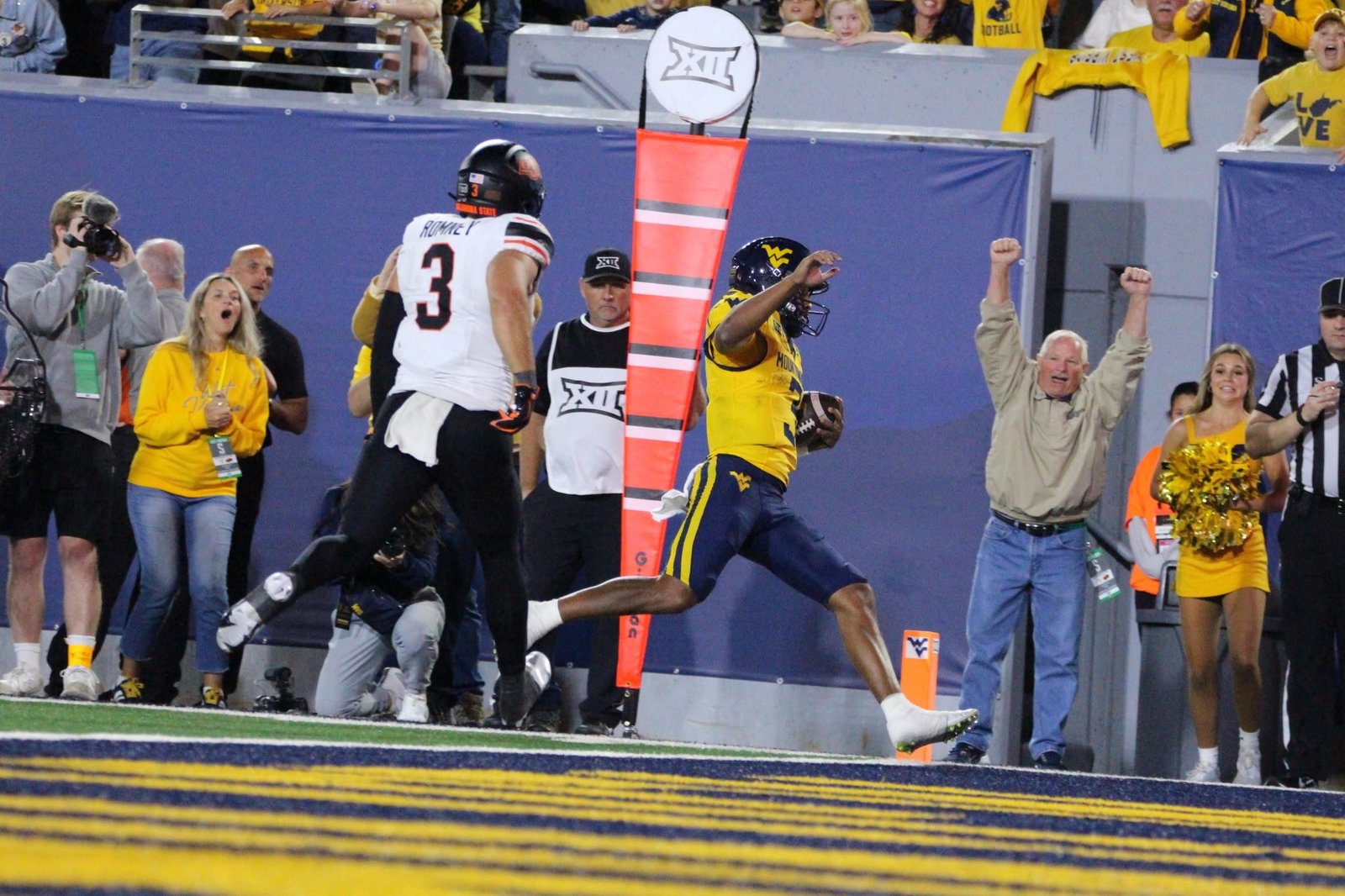
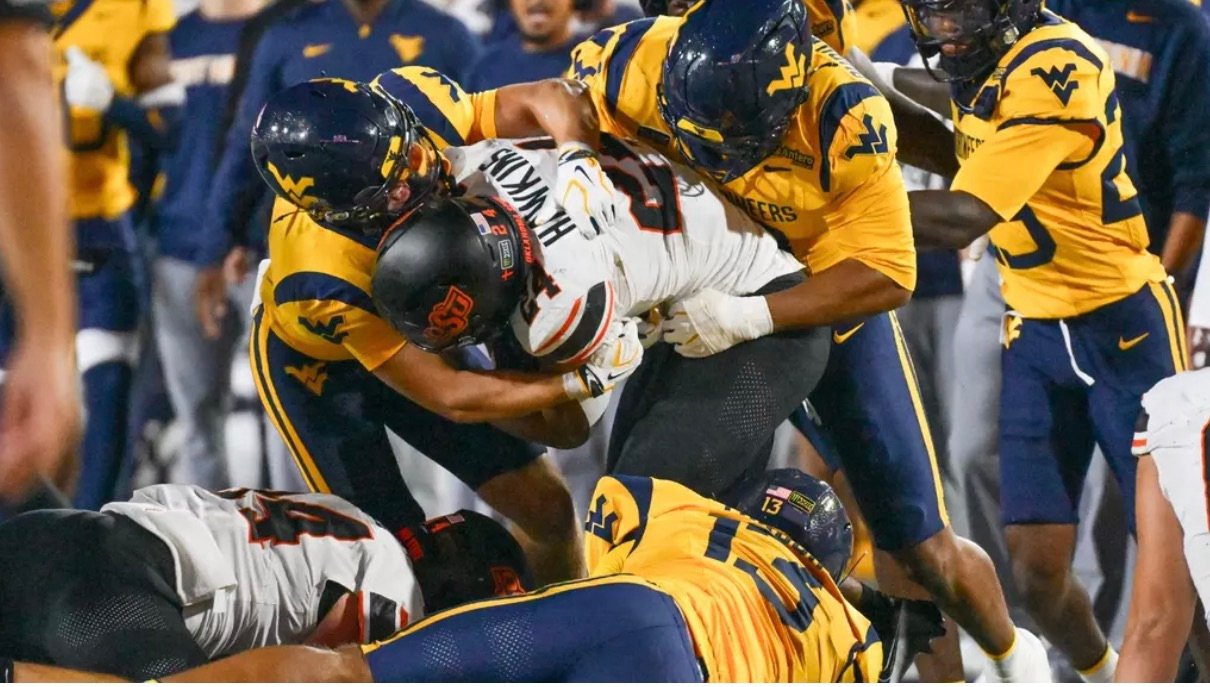
WVU football fans are still reeling over the defensive performance in Saturday’s loss to Oklahoma State. Some of those fans are forgetting one fact, though. The Cowboys offense also put up big numbers two weeks earlier against a top-10 Oregon team.
Did West Virginia’s defense play worse than Oregon’s when facing the explosive Oklahoma State offense? Let’s compare, shall we?
Oregon allowed 41 points to the Cowboys and WVU allowed 39, but the gap between the defenses is bigger than the score suggests. Oregon gave up 6.7 yards per play. West Virginia gave up 9.0. The Ducks also faced 83 snaps and nearly 37 minutes of Oklahoma State possession, yet allowed 55 fewer yards than the Mountaineers, who faced 68 snaps in just under 29 minutes.
The difference was the passing game. Oklahoma State Quarterback Drew Mestemaker averaged 14.4 yards per attempt against WVU and 7.4 against Oregon. He completed 74.1% of his passes against the Mountaineers and 60.5% against the Ducks. Oklahoma State had nine completions of 20 or more yards against West Virginia, compared to five against Oregon. Those nine plays made up more than 80% of the Cowboys’ passing yardage. Wide Receiver Wyatt Young alone had five of them.
The Oregon defense also made more plays on the ball. The Ducks had seven pass breakups, three quarterback hurries and two interceptions, including a 96-yard pick-six from Devon Jackson. West Virginia had no pass breakups, one hurry and one interception from Kamari Wilson. Neither team recorded a sack. WVU Head Football Coach Rich Rodriguez said after the game that Oklahoma State’s receivers were getting open and that the defense didn’t generate enough pressure to keep Mestemaker from getting comfortable. The numbers back that up.
It wasn’t all bad for the Mountaineers, though. WVU was better than Oregon in several areas:
- Rushing defense: West Virginia allowed 5.4 yards per carry, while Oregon allowed 5.9.
- Third down: Oklahoma State converted just 2 of 10 against the Mountaineers and 5 of 17 against the Ducks.
- Tackles for loss: WVU had three, and Oregon had one.
- QB running: WVU held Mestemaker to zero rushing yards. He ran for 109 against Oregon, including a 75-yard run.
- First half: West Virginia allowed only 13 points and led 14-13 at halftime. The Mountaineers still led 24-21 in the third quarter before Oklahoma State scored the final 20 points of the game.
West Virginia’s Geimere Latimer also deserves credit. He had six tackles, two tackles for loss and a forced fumble. PFF named him to its Big 12 Team of the Week. A rough day for the pass defense as a whole doesn’t mean every defensive back struggled.
There is also some context. Oregon started nine defenders who were four- or five-star recruits, according to 247Sports. West Virginia started one. Seven of WVU’s 11 starters on defense were also in their first season with the program, including five of the six in the secondary. Oregon had only two first-year starters and returned its entire front group. That doesn’t explain every completion, and the numbers can’t show who was responsible for each coverage breakdown. It does help explain why a defense with so many new pieces would have trouble with communication and explosive plays.
Overall, Oregon was clearly the more efficient defense against Oklahoma State, mostly because it kept big plays out of the passing game. West Virginia wasn’t worse in every area, and the run defense and third-down work were encouraging. The challenge now is fixing the explosive pass plays and getting more pressure on opposing quarterbacks.
The Mountaineers (3-1, 0-1) look to bounce back this Saturday as they travel to Ames, Iowa to take on the Iowa State Cyclones (2-2, 0-1). The game kicks off at 12:00pm Eastern time and is set to air on TNT.