By James Gravley | WV Sports Chat
If there is one thing West Virginia baseball fans have learned over the past few seasons, it is that this program is no longer satisfied with simply being competitive. The Mountaineers have established themselves as a legitimate force in college baseball, and after making history in 2026, expectations in Morgantown are understandably rising.
But what should fans realistically expect heading into the 2027 season?
There are plenty of reasons to be excited. Head coach Steve Sabins has assembled a roster with returning talent, experienced transfers, promising young players and a recruiting pipeline that continues to grow.
At the same time, there are legitimate questions that cannot be ignored.
West Virginia has an opportunity to put together another special season, but replacing important production, rebuilding the pitching staff and finding the right combination of players will determine just how far this team can go.
Let’s take a closer look at why Mountaineer fans should be excited — and why expectations should come with a little patience.
THE REASONS FOR EXCITEMENT
1. Gavin Kelly gives WVU a tremendous offensive foundation
If there is one returning player who should immediately get fans excited, it is Gavin Kelly.
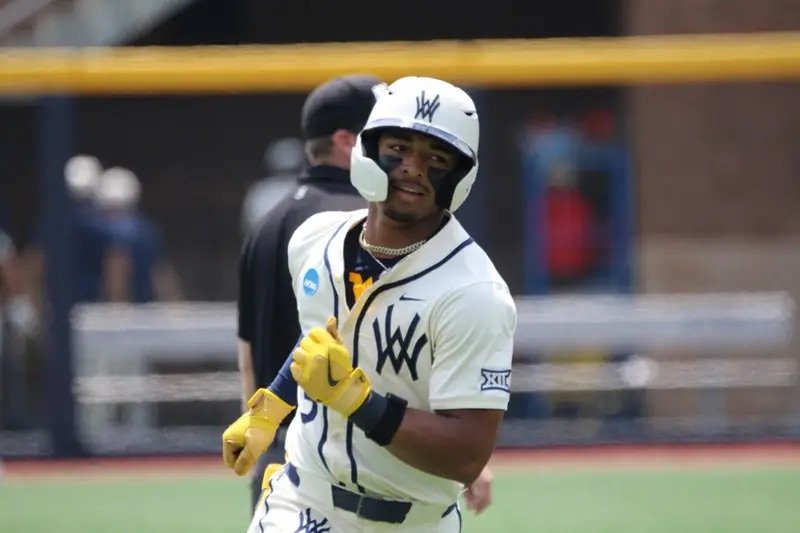
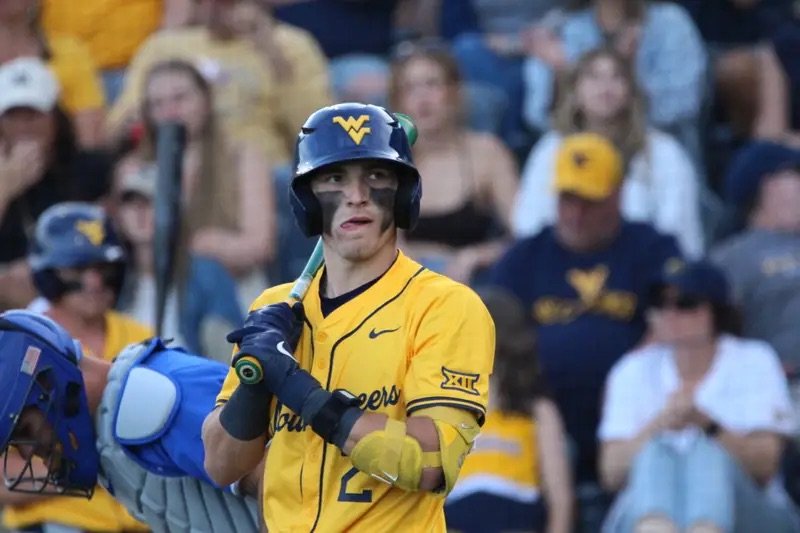
Kelly is coming off a tremendous season that established him as one of the premier players in college baseball. His 19 home runs tied the WVU single-season record, and his ability to impact a game goes well beyond the power numbers.
He brings an important combination of offensive production, athleticism and experience.
Kelly’s presence gives the Mountaineers an established offensive centerpiece, someone opposing pitching staffs will have to account for every time he steps into the batter’s box.
Whether he is behind the plate or utilized elsewhere, his importance to this lineup cannot be overstated.
2. The returning core has something to prove
Kelly isn’t the only reason to feel optimistic.
Armani Guzman, Matt Ineich and Tyrus Hall provide additional experience and familiarity with the program.
Guzman brings speed and versatility, while Ineich offers an experienced presence in the infield. Hall gives the Mountaineers another option with postseason experience and the potential to provide important offensive production.
There is also an opportunity for players such as Chase Ecker, Ryan Piekutoski and Colin Coonradt to become significant contributors.
A projected lineup featuring Kelly, Guzman, Coonradt, Piekutoski, Ineich, Hall, Ecker and other emerging bats has the potential to give WVU a dangerous offensive combination.
The important word, however, is potential.
3. The newcomers could change the complexion of the lineup
One of the most intriguing aspects of the 2027 roster is the number of new faces.
West Virginia has added players from the transfer portal, junior college ranks and the high school recruiting circuit.
Jack Cannon is an especially interesting addition after an outstanding season at Le Moyne. His ability to hit for average and create problems on the bases could give the Mountaineers another dimension offensively.
Henkel Acevedo is another player worth watching. His physical tools and offensive upside could make him an important part of the outfield picture.
Cash Williams is another intriguing name. The former Tennessee player brings catching and outfield versatility, giving the coaching staff another option as the lineup develops.
And don’t overlook the freshman class. Players such as Kayden Lipscomb, CJ Alfano, Slade Barton and the other newcomers have an opportunity to make an impression.
The competition for playing time should be one of the most interesting storylines throughout the offseason.
4. Steve Sabins has created a program worth believing in
Perhaps the biggest reason for excitement isn’t necessarily one player.
It’s the direction of the program.
West Virginia went 47-17 in 2026, reached the Men’s College World Series for the first time in program history and finished among the final four teams in Omaha.
That accomplishment matters.
It demonstrates that WVU can recruit, develop and compete with some of the best programs in the country.
Sabins and his staff have also shown a willingness to use the transfer portal, develop young talent and build a roster with different skill sets.
Fans have every reason to believe that the goal in Morgantown is to compete for championships, not simply make postseason appearances.
THE CAUTION: WHY FANS SHOULD PUMP THE BRAKES A LITTLE
Now for the other side of the conversation.
As exciting as the 2027 roster looks on paper, there are some serious questions that need answers before anyone starts predicting another trip to Omaha.
1. Replacing the pitching production will be the biggest challenge
This is where I believe the most caution is necessary.
West Virginia is losing significant pitching production from its historic 2026 team.
Chansen Cole is among the important returning arms, but the Mountaineers will need considerably more than one dependable pitcher to navigate a Big 12 schedule.
Cole led the team in innings pitched with 99.2 last season. The next five pitchers on the innings leaderboard signed professional contracts.
That is a substantial amount of experience and workload to replace.
David Hagen, Weston Smith, Bryson Hoff and the other returning arms will have opportunities to establish themselves. The newcomers will also be expected to contribute.
But there is a difference between having talented pitchers on a roster and having a dependable weekend rotation.
WVU needs starters who can consistently work deep into games, a reliable bullpen and pitchers who can handle pressure situations.
Until those roles become clearer, the pitching staff remains the biggest question mark.
2. Replacing last year’s offensive production won’t be easy
Kelly, Guzman, Ineich and the returning players give WVU a foundation.
However, fans should remember that the 2026 team was special for a reason.
West Virginia is not simply replacing a couple of bats. It must replace the production, experience and leadership of several players who helped establish the program’s best season ever.
The newcomers may have impressive resumes, but translating production from another level or program into the Big 12 is never guaranteed.
Cannon, Acevedo, Williams and the other newcomers could become important pieces, but there will be an adjustment period.
It is also important not to assume every returning player will automatically take another step forward.
3. Position battles could create some growing pains
The projected lineup is intriguing, but there are still questions to answer.
Who ultimately takes over at second base?
How will the coaching staff balance the available outfield options?
Where will Guzman’s versatility be most valuable?
Can Piekutoski establish himself as a consistent first baseman?
Will Williams push for a larger role behind the plate?
These are good problems to have, but they are still problems that need to be solved.
A roster with competition is healthy. A roster without established answers at key positions can also experience inconsistency early in the season.
4. The expectations are different now
This might be the most important point.
West Virginia is no longer entering a season hoping to surprise people.
After reaching Omaha and finishing among the final four teams in the country, the Mountaineers will have a target on their backs.
Opponents will take them seriously. Big 12 teams will be eager to knock them off, and every series will bring a different challenge.
There is also a difference between reaching the College World Series once and building a program capable of returning consistently.
That is the next challenge for Sabins and his staff.
Fans should be excited about the opportunity, but they should also understand that repeating a historic run is incredibly difficult.
The outlook and realistic expectations
My outlook is that West Virginia has the pieces to remain a very competitive Big 12 program and potentially make another postseason run.
I genuinely like the offensive possibilities.
Kelly gives this team a star. Guzman provides speed and versatility. Ineich and Hall bring experience, while Cannon, Coonradt, Ecker, Piekutoski and Acevedo offer opportunities for the lineup to develop into something dangerous.
There are also young players who could surprise fans and earn meaningful playing time.
But I am not ready to automatically put this team in the same category as the 2026 squad.
The pitching staff has too many questions right now, and replacing that much experience is not something that happens overnight.
If the starting rotation comes together, the bullpen finds consistency and the newcomers adjust quickly, this team could surprise people all over again.
If those things don’t happen, there could be some frustrating stretches along the way.
Sabins has built something special in Morgantown, and the foundation is there for another competitive season.
However, excitement should not turn into unrealistic expectations.
The 2026 team accomplished something that had never been done in program history. That achievement should be celebrated, not used as an automatic measuring stick for every team that follows.
The 2027 Mountaineers have their own identity to create.
They have returning stars, intriguing newcomers, talented young players and an opportunity to show that West Virginia baseball is here to stay among the nation’s best.
My biggest question isn’t whether WVU has enough talent to compete.
It’s whether the pitching staff can develop into the kind of unit capable of carrying this team through the toughest stretches of the season.
The potential is there. The expectations are higher. But the work still has to be done.
And if Sabins and his staff can find the right answers on the mound, don’t be surprised if Mountaineer fans have another exciting spring ahead.
Photo: Shanna Rose | WV Sports Chat